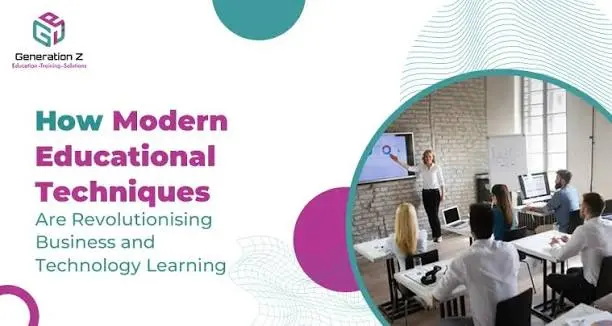
Learning today is no longer confined to traditional classroom models. This shift reflects a positive transformation across schools, training institutions, and digital learning environments. Students are increasingly encouraged to participate actively in discussions, collaborative tasks, and problem-solving activities. Mistakes are treated as part of the learning process, fostering a supportive environment that promotes growth rather than fear.
Modern teaching methods push learning beyond memorisation, shaping how education develops today because they value grasping ideas more than finishing set curricula.
Why Traditional Learning Models Became Restrictive
For decades, education followed a linear structure. Teachers delivered content, students memorised information, and examinations served as the primary measure of success. While effective in earlier contexts, this model struggles to meet the demands of today’s fast-paced business and technological landscape.
Many learners completed their education with strong theoretical knowledge but limited practical confidence. They understood definitions yet found it difficult to apply them in real-world scenarios. Modern educational techniques emerged to address this gap, offering a more responsive and practical learning framework.
Collaboration as a Foundational Skill
Team-based learning has become an integral part of contemporary education. Students are encouraged to share ideas, manage differences, and work collectively towards shared outcomes. These experiences cultivate communication skills, emotional intelligence, and accountability.
In the context of school performance improvement UAE, emphasis is placed on how effectively students apply knowledge rather than focusing solely on examination scores. Learning outcomes are assessed through both academic achievement and practical competence.
Skills-Centred Teaching Approaches
Modern teaching methods place greater value on skill development than on memorisation of facts. While academic standards remain important, learning is structured to ensure knowledge retention and practical relevance.
Key principles commonly include:
- Learning through practical application rather than passive listening
- Encouraging curiosity and open dialogue
- Connecting lessons to real business and technology challenges
- Purposeful use of technology to enhance understanding
- Constructive feedback that supports continuous improvement
These methods create a balanced and structured learning environment that guides students forward without unnecessary rigidity.
Practical Orientation in Business Education
Now shaping how firms operate, business teaching moves beyond old models. Through practical settings instead of textbooks alone, learning mirrors actual workplace demands.
Working on real-world tasks shapes how students approach challenges. Through market studies, they begin seeing patterns others miss. Simulated companies let them test ideas without risk. When problems arise during strategy drills, new solutions emerge. Flexibility grows alongside clearer ways of sharing thoughts. Tough results often teach more than smooth ones. Mistakes become stepping stones, quietly building readiness for future roles.
Technology Education With Accessibility
Technology education is no longer designed to overwhelm learners. Modern techniques focus on gradual engagement and confidence building.
Creating Before Explaining : Students begin by developing simple projects, such as basic applications or digital solutions. Conceptual understanding follows practical experience.
Flexible Learning Pathways : Blended learning models accommodate varying learning speeds through a combination of digital content, instructor-led sessions, hands-on activities, and peer collaboration.
Problem Identification Before Tool Selection : Learners are trained to analyse challenges first, then select appropriate tools. This approach promotes long-term adaptability rather than dependency on specific technologies.
Technology as an Enabler of Education
Technology supports learning rather than dominating it. Digital platforms assist with progress tracking, revision, and assessment. Virtual labs enable safe and controlled practice environments.
In educational business setup UAE, this balanced approach supports innovative educational business setups, where scalability and quality must operate together.
Institutional Benefits of Modern Educational Techniques
Institutions adopting modern educational methods often experience improvements beyond academic performance, including:
- Higher student engagement
- Increased teacher satisfaction
- Consistent improvement in learning outcomes
- Greater parental confidence
- Enhanced institutional credibility
These outcomes directly contribute to school performance improvement across the UAE’s competitive education sector.
Key Considerations for Implementation
Adopting modern techniques requires careful planning. Important factors include:
- Teacher training and readiness
- Gradual student adaptation
- Responsible integration of technology
- Clearly defined learning objectives
- Ongoing evaluation and refinement
When implemented thoughtfully, these approaches strengthen educational foundations without disruption. Despite advancements in technology and methodology, education remains a human process.
Students require guidance, encouragement, and understanding. Effective education balances structure with flexibility and innovation with empathy.
Therefore, this balance builds learner confidence, which directly influences capability and long-term success.
Preparing Learners for the Future
Students today are preparing for roles that may not yet exist. Education must therefore develop critical thinking, adaptability, and collaborative skills rather than focusing solely on assessment results.
Modern classrooms reflect this shift through interactive learning, discussion-based instruction, and teamwork-driven activities.
Education Investment Opportunities in the UAE
Education is a strategic priority in the UAE, recognised as a driver of sustainable economic growth. This creates strong education investment opportunities UAE across private schools, training institutes, and educational technology platforms.
The sector attracts interest because:
- Parents seek future-ready education
- Students demand practical skill development
- Institutions value flexible and scalable models
Modern educational techniques enhance both impact and scalability, offering investors opportunities with long-term value.
Final Thoughts
Education today extends beyond syllabus completion. Its purpose is to prepare learners for an evolving global environment. Modern educational techniques represent a necessary progression, not a temporary trend.
For students, they provide clarity and confidence. For institutions, they ensure relevance and growth. For investors, they offer meaningful opportunities aligned with national priorities.
In forward-thinking regions such as the UAE, this transformation reflects a balanced, thoughtful, and human-centred approach to learning.