The first year of teaching has a certain look to it. You can almost spot it in the way someone carries their laptop bag a little too tight, or how they stay back after school pretending to organize papers when they are really just trying to breathe. No one talks about that part enough. Everyone talks about lesson plans and curriculum goals, but the quiet panic, the tiny daily doubts, that is where most growth actually begins. This is exactly why conversations around teacher training courses in Dubai matter more than people think.
Because new teachers do not struggle with knowledge. They struggle with reality.
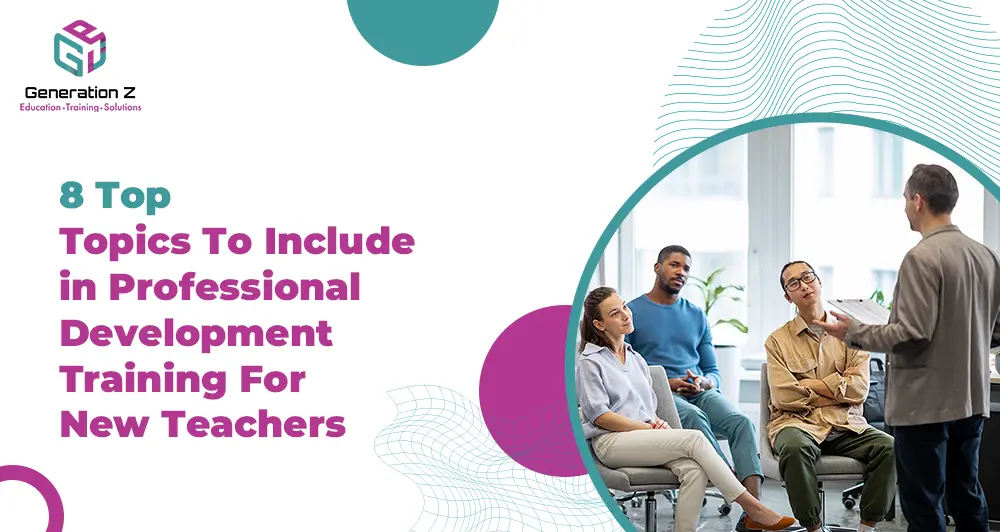
Here’s eight things to keep in mind as a to-be teacher.
Classroom management is not about control
This is where people get it wrong. Classroom management sounds like it belongs in a rulebook, charts, consequences and systems. But step into a real classroom and you will see that control is the least useful word in the room.
What new teachers really need is the ability to read a room. To sense when energy is about to tip. To know when silence is productive and when it is just confusion hiding. The truth is, children are not difficult by default. They react, test space and push where things feel unclear.
Professional development should talk about tone, body language and how standing still can sometimes be stronger than raising your voice. These are small things. However they change everything and yes, routines matter. Routines only work when they feel natural.
Understanding child psychology not just behavior
New teachers often see behavior first like the habit of talking back, restlessness, blank stares. What most people miss is that behavior is just the surface. Underneath, there are fears, insecurities, pressure from home, sometimes simple hunger or exhaustion. No one hands you a manual for that.
This is where deeper teacher training programs start to matter. Not the kind that throws theories at you, but the kind that makes you sit with real scenarios. The kind that ask, “What else could be going on here?” Because once you shift from reacting to understanding, the classroom feels different.
Lesson planning that breathable
There is something almost funny about how perfectly structured lesson plans look on paper. Then you walk into class. A projector stops working. Half the class forgot their notebooks. One child is crying quietly in the corner. Suddenly that perfect plan feels fragile. New teachers need to learn how to plan loosely. With space. With room to stretch or shrink. This is where it matters. Not rigid planning, but responsive planning. The goal is not to finish slides. It is to make sure something meaningful happens in those forty minutes. Even if it is small and sometimes the best lessons are the ones that drift slightly off track.
Assessment without fear
Assessment can quietly turn into pressure on students and teachers. This is usually where problems start. New teachers often tie their own confidence to student scores. A low mark feels personal. A high average feels like relief. That is a heavy weight to carry.
Professional development should talk about feedback as a conversation. About formative checks that feel natural. About letting students see mistakes as normal, not shameful. Marks matter, yes. But growth matters more and growth rarely looks neat.
Communication with parents
This one surprises many new teachers. Teaching is not just about students. It is about parents too. Their worries, expectations and late night messages. The truth is, one difficult parent conversation can shake a new teacher more than a noisy classroom.
Training needs to cover this openly. How to listen without getting defensive. How to explain decisions clearly. Ultimately how to admit uncertainty when needed because pretending to know everything usually backfires.
Emotional resilience
This topic rarely gets enough space. Teaching can be exhausting in a way that is hard to explain. It is not just physical. It is emotional. You are holding attention, energy, conflict and curiosity all at once. New teachers need to hear that feeling overwhelmed does not mean they are failing. It means they care.
Professional development should include space for reflection. Not forms to fill out, but conversations about stress, boundaries and recovery. Burnout does not arrive loudly. It builds slowly and quietly. This is where it matters most.
Cultural Sensitivity and Inclusion
Classrooms today are layered with different languages, traditions and ways of thinking. New teachers sometimes worry about saying the wrong thing or not knowing enough about a student’s background. The truth is, perfection is not the goal here. Respect is.
Training should help teachers ask better questions. To stay curious. To recognize bias gently, even in themselves. Because inclusion is not a poster on the wall. It shows up in daily choices. In examples used during lessons. In how names are pronounced. Small things again. But they stay with students.
Digital Tools Without Overwhelm
Technology in classrooms is everywhere now. Smart boards, apps, online grading systems but here is the honest part. Too much technology can distract more than it helps. New teachers often feel pressure to use every tool available. Slides, videos, quizzes, platforms. It becomes noise.
Good professional development should help teachers choose, not just use. To ask, “Is this tool helping learning, or just filling time?” Simple can be powerful. A well asked question sometimes beats a flashy presentation.
In places where education is evolving quickly, especially through structured teacher training courses dubai, there is growing attention on blending digital tools with real human connection. That balance is delicate and it is worth getting right.
Final Thoughts
New teachers do not need perfection. They need preparation that feels honest. Professional development training should cover the practical pieces, yes. But it should also speak to the emotional weight of the job. The invisible parts. The small doubts. Because teaching is not a performance. It is a relationship built over time.
And when professional development gets that right, when it addresses classroom reality instead of just theory, something shifts. Teachers stop surviving and start settling into their role. That shift is quiet. Almost invisible. But it changes everything.
Why Generation Z Education Stands Out
There is something refreshing about how Generation Z education training solutions approach this space. It does not feel overly polished. It feels grounded in what teachers actually face. The focus is not only on content delivery but on preparing educators for real classrooms, real conversations, real pressure. That difference shows.
What most people miss is that strong training is not about collecting certificates. It is about building quiet confidence. The kind that shows up on a random Tuesday afternoon when a lesson falls apart and you still manage to guide the room back gently. That is the goal.