There is a kind of silence that settles into a home when adults feel tired in a way sleep cannot fix. It is not loud or dramatic, but soft and steady, showing up in small things like a slightly sharp tone, a delayed reply, or a child waiting a little longer before asking something simple. People do not always talk about this part. They talk about routines, schools, screen time but not this quiet weight. Somewhere in all of it, Parent mental health support becomes less of an idea and more of something you wish existed in the room with you.
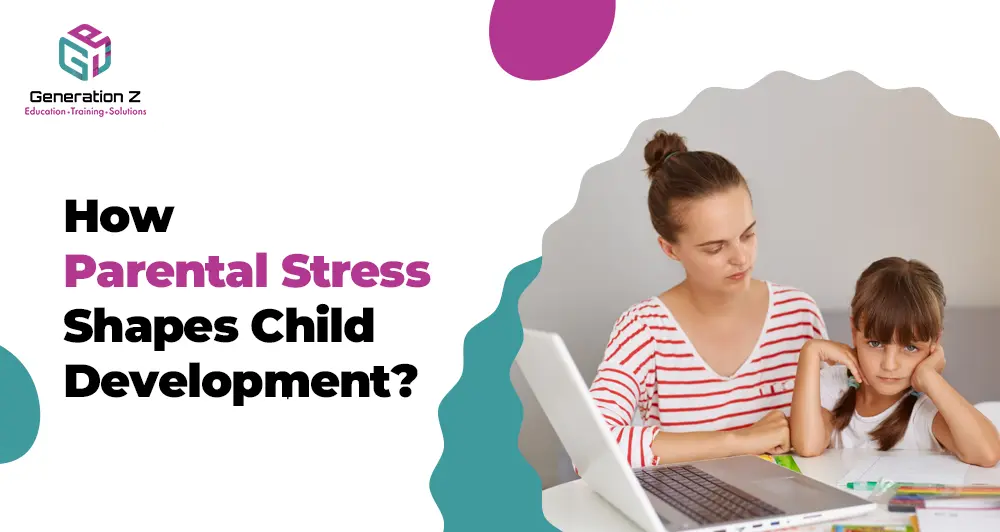
Here's How Parental Stress Shapes Child Development.
It rarely starts as something big. No one wakes up and decides to pass stress down. It builds work pressure, money concerns and the constant feeling of needing to do more. Then it leaks. A child notices before anyone says it out loud. They notice how answers become shorter. How patience runs thinner in the evening. How even small mistakes feel heavier than they should.
And the thing is, children do not always understand stress the way adults do. They do not label it. They absorb it quietly. Sometimes it is just a look or a pause before replying. There’s always a simple question that gets an irritated answer. These moments feel small when they happen, but they repeat. That is where it settles. Children begin adjusting themselves. They start talking less, asking less or sometimes the opposite.
They begin acting out, testing limits. Not because they are difficult, but because something feels off and they do not know how to name it. It is easy to miss. Honestly, most people do.
Calm Moments Start Disappearing
Homes do not need to be perfect. No one expects that but when calm moments become rare, children start living in that gap. They become more alert than they should be. They read moods instead of just being themselves. It is subtle. You would not notice it in a day. But over time, it shows.
Obviously ways are not simple but sometimes it shows in how they hesitate or how they react too quickly. Eventually how they try to fix things that were never theirs to fix.
Patterns That Repeat Without notice
There is a tendency to turn this into guilt. That does not help anyone. Most parents are already carrying enough of that. It is more about patterns. The kind that repeats without being planned. The ones that feel normal because they have been there for so long. Sometimes, it takes seeing the same thing in different places to realize it is not just a one-time situation.
Child Development Across Different Families
You start noticing it in other homes too. Conversations that feel rushed. Children who are a little too careful. Parents who are trying, clearly trying, but still stretched thin. It is not about good or bad parenting. That feels too simple. It is about capacity. How much someone can hold before it spills over. At some point, you begin to think maybe support should not feel optional.
People Try to Manage Everything
In many such situations, we at Generation Z Training and Education focus on both the child and the environment around them, understanding that parental stress plays a real role in how children grow, and shaping our approach to support that connection in a more practical and balanced way. Not a solution to everything. But at least an acknowledgement that the environment matters as much as the child.
Most parents try to handle stress on their own. They adjust routines, cut down on things as well as try to be more patient. Some days it works while other days it does not. And that is where Mental health support for parents starts to feel less like a luxury and more like something practical. Not because something is broken. Just because it is a lot to carry alone.
Support Feels Distant
There is also this hesitation. Reaching out feels like admitting something is wrong. So people wait. They manage. They push through. Meanwhile, children continue picking up on what is left unsaid. It is not always about big interventions. Sometimes it is about having spaces that understand the overlap between adult stress and child behavior. Spaces that do not separate the two. And when those spaces exist, even in small ways, things evolve a little.
Reaching Out Feels So Hard
No, It’s never about perfect homes. Just quieter in a different way. The kind where responses feel softer. Where pauses are not filled with tension. Where children do not have to read the room all the time. It does not happen overnight. As well as it is not consistent either but it is noticeable.
Conclusion
Even a small reduction in stress changes the tone of a home. Conversations feel easier. Mistakes feel lighter. There is more room for things to just be normal. Children respond to that almost immediately. They relax, open up and over time learn to stop overthinking simple things. It makes you realize how much of their behavior was never really about them.
You go back to the same thought, again and again in passing moments. Maybe it was never about fixing children but about understanding the space they are growing in. Though there is where something like Stress management for parents starts to make more sense. This keep evolving not as a concept but more as something practical, almost necessary.
You notice it in places that approach things with a bit more awareness. It’s always about the quieter understanding that children do better when adults are supported too. It stays with you. That’s not a solution but something that feels a little more aligned with how things actually are. Maybe that is enough to start noticing things differently.
FAQs
1. Can parental stress really affect a child that much?
Yes, but not always in obvious ways. It shows up slowly. In behavior, in mood, in how a child responds to small situations. Most of it is subtle.
2. Do children understand when parents are stressed?
They may not understand it fully, but they sense it. They notice tone, reactions, and changes in routine more than we think.
3. Is it always harmful, or is some stress normal?
Some stress is part of life. The issue is when it becomes constant. When it starts shaping daily interactions again and again.
4. What are early signs that stress is affecting a child?
You might notice changes like becoming quieter, more reactive, or unusually cautious. Sometimes it is just a shift in how they express themselves.
5. How can Generation Z Training and Education help in this situation?
Generation Z Training and Education looks at both the child and the environment they are growing in. Instead of focusing only on behavior, they also consider how parental stress plays a role. This makes their approach feel more practical and connected to real-life situations, not just theory.