Why ISO 21001 Certification Matters for Your School in UAE
08 July 2026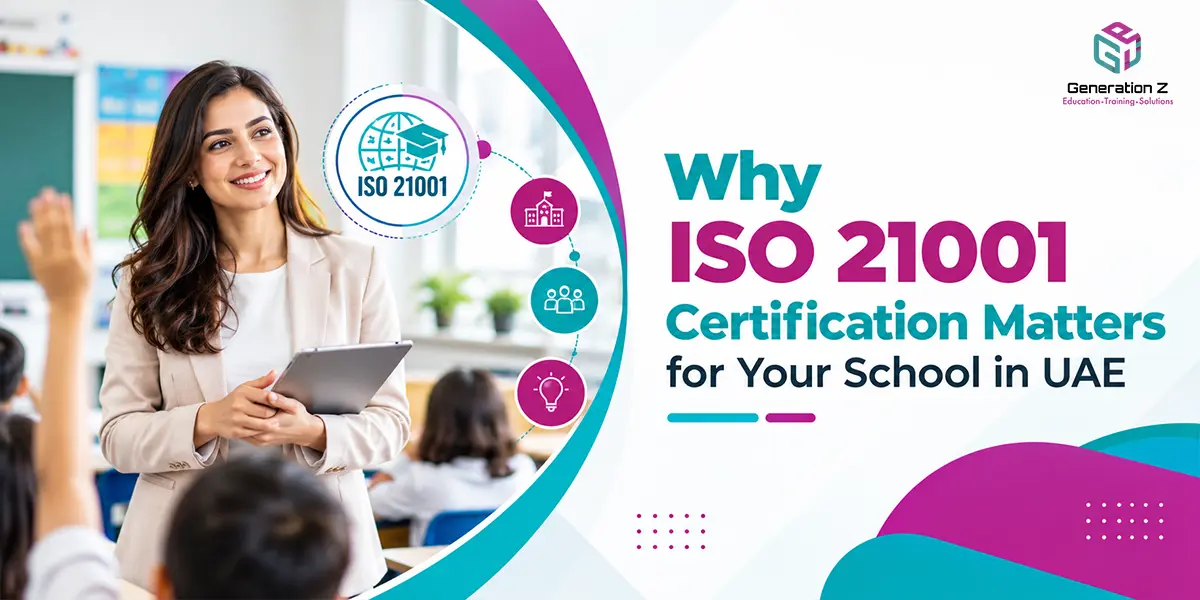
ISO 21001 isn't a plaque on the wall — for schools that implement it properly, it's a management system that makes every other compliance requirement easier to meet.
At its core, ISO 21001 requires a school to define clear processes for how it sets goals, measures progress, and continuously improves — across academics, operations, and stakeholder communication. Schools that implement it properly find that many KHDA, ADEK, or SPEA inspection requirements become easier to demonstrate, because the documentation and tracking systems ISO 21001 requires overlap significantly with what inspectors are already looking for.
Beyond regulatory alignment, ISO 21001 certification also functions as a credible external signal to parents and investors that a school's quality processes aren't just internally asserted but independently verified — a distinction that increasingly matters in a competitive, premium-fee market. For schools considering expansion or a future sale, this external verification also tends to carry real weight with investors and acquirers, who see a certified management system as evidence of institutional maturity rather than a founder-dependent operation.
1. Gap Assessment Against the Standard
The process typically begins with an honest assessment of current practice against ISO 21001's requirements, identifying where existing systems already satisfy the standard and where new processes need to be built.
2. Building Sustainable, Not Just Auditable, Systems
The schools that get the most value from ISO 21001 build systems their staff actually use day to day, rather than documentation that exists solely to satisfy an annual audit.
3. Maintaining Certification Over Time
ISO 21001 certification isn't a one-time achievement — ongoing internal audits and continuous improvement cycles are required to maintain it, and schools that treat this as optional risk losing certification at renewal.
4. Involving Staff Genuinely, Not Just Leadership
Certification efforts that involve only senior leadership tend to produce systems that staff find disconnected from their daily work — genuine staff involvement throughout the implementation process produces a management system people actually use, rather than one imposed from above.
Not every consultancy offering ISO 21001 support has genuine, sector-specific education experience, and schools should be cautious of generic quality management consultants applying a template built for manufacturing or corporate services rather than one genuinely adapted to how schools actually operate.
Sector-Specific Experience Matters
A partner with direct experience implementing ISO 21001 specifically within UAE schools will understand how to align the standard's requirements with KHDA, ADEK, or SPEA's own expectations simultaneously, rather than treating the two as entirely separate exercises that happen to overlap by coincidence.
ISO 21001 certification rewards schools that treat it as a genuine operating system rather than a certificate exercise. Done properly, it becomes the backbone that makes every other compliance and quality demand easier to meet.
Schools that invest the effort to build this properly from the outset typically find each subsequent renewal audit considerably lighter than the first, since the systems are already embedded and simply need maintaining rather than rebuilt from scratch each cycle.